Soil and Drainage Map
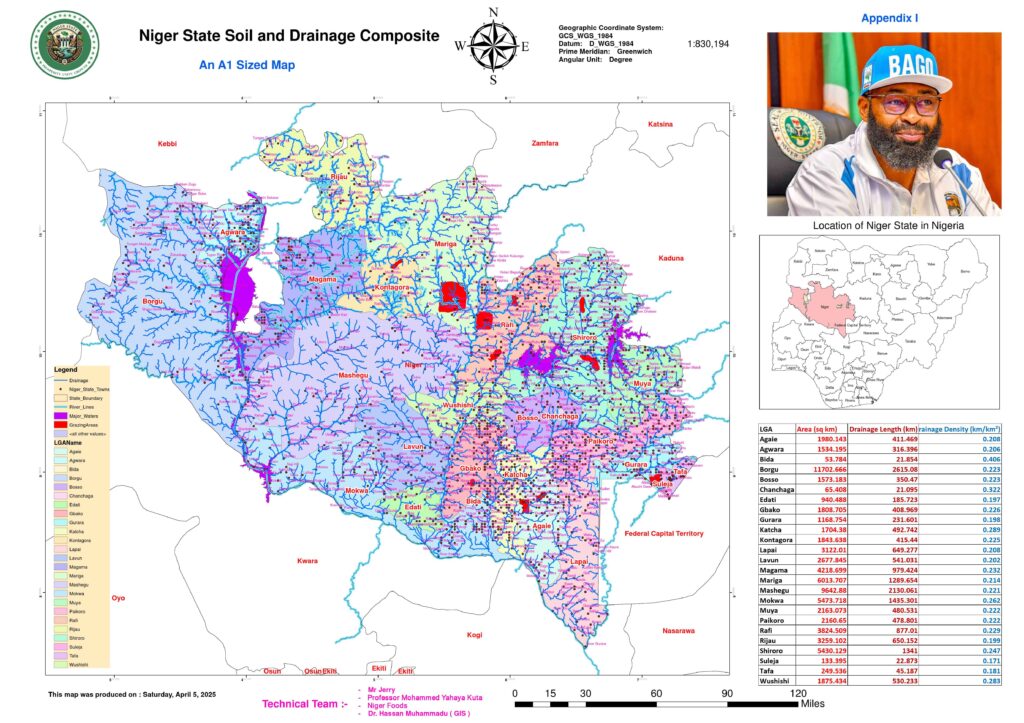
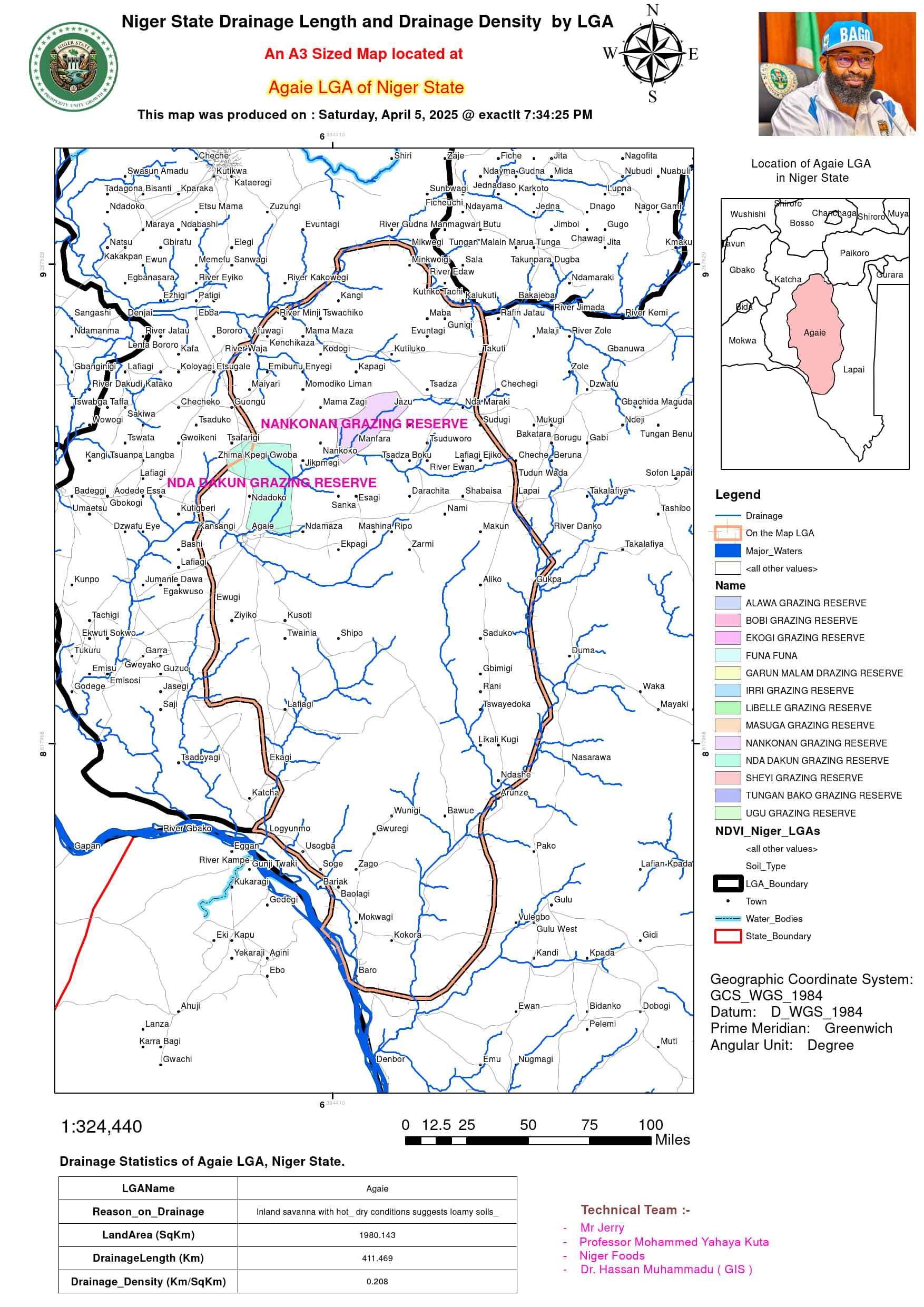
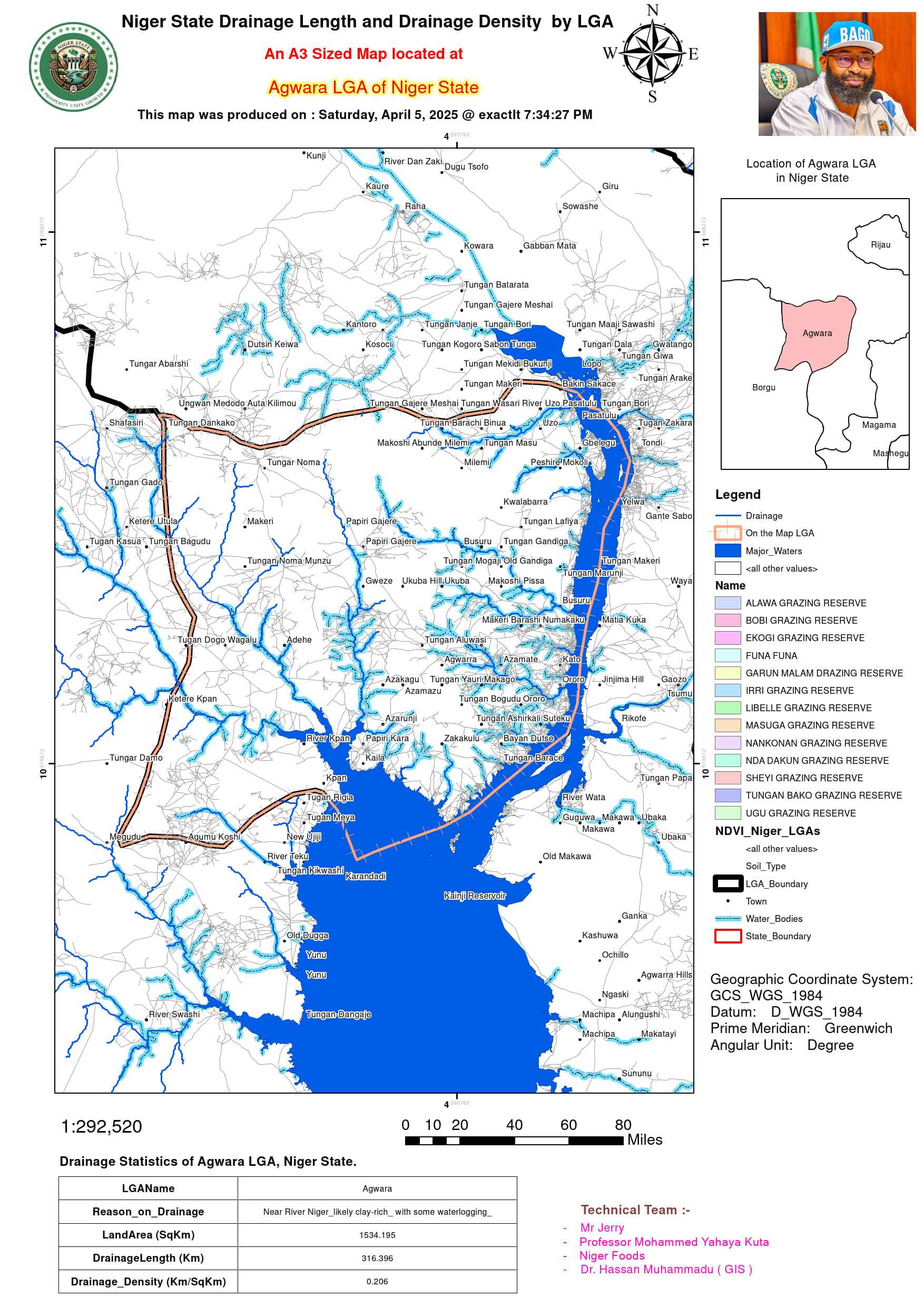
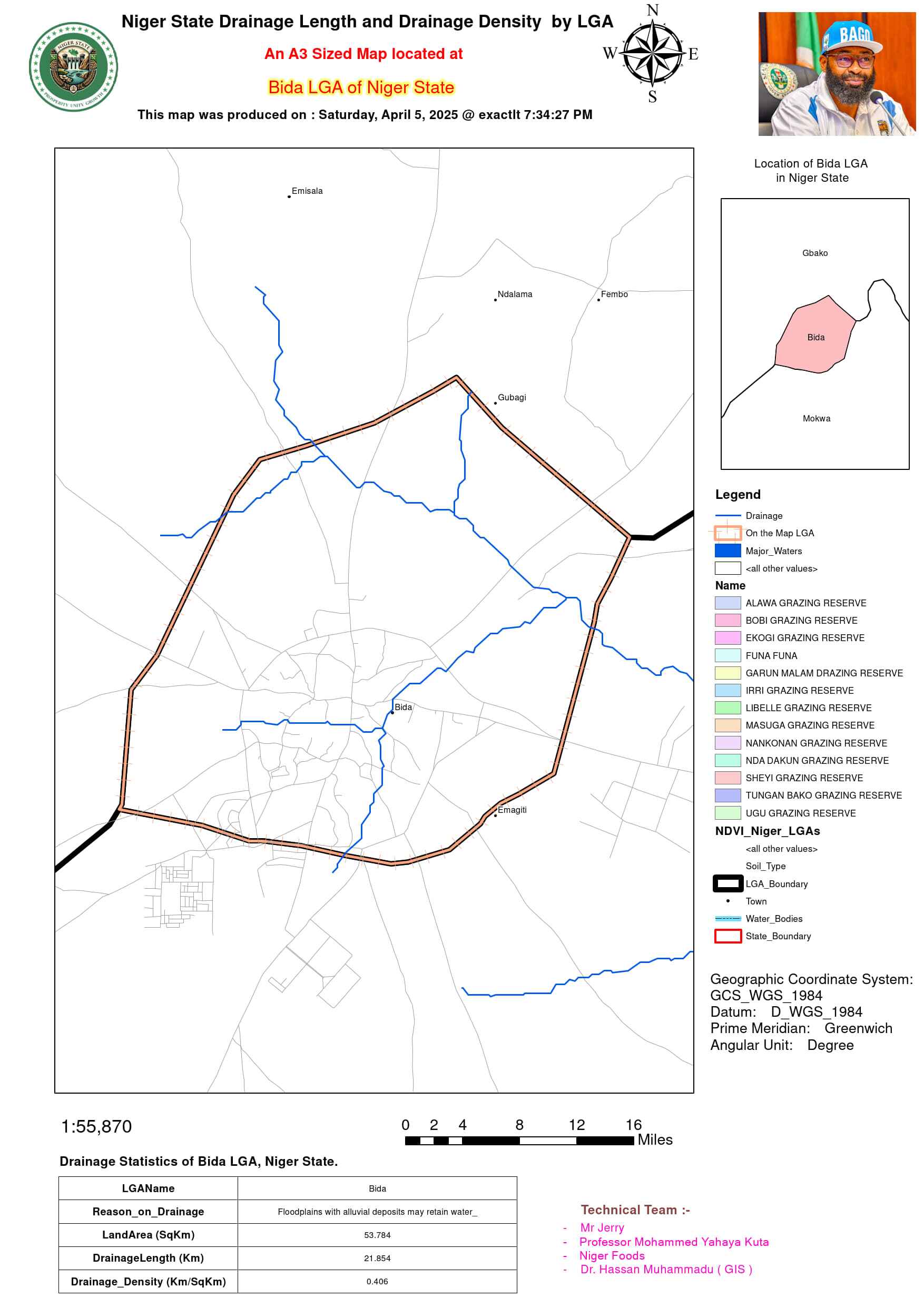
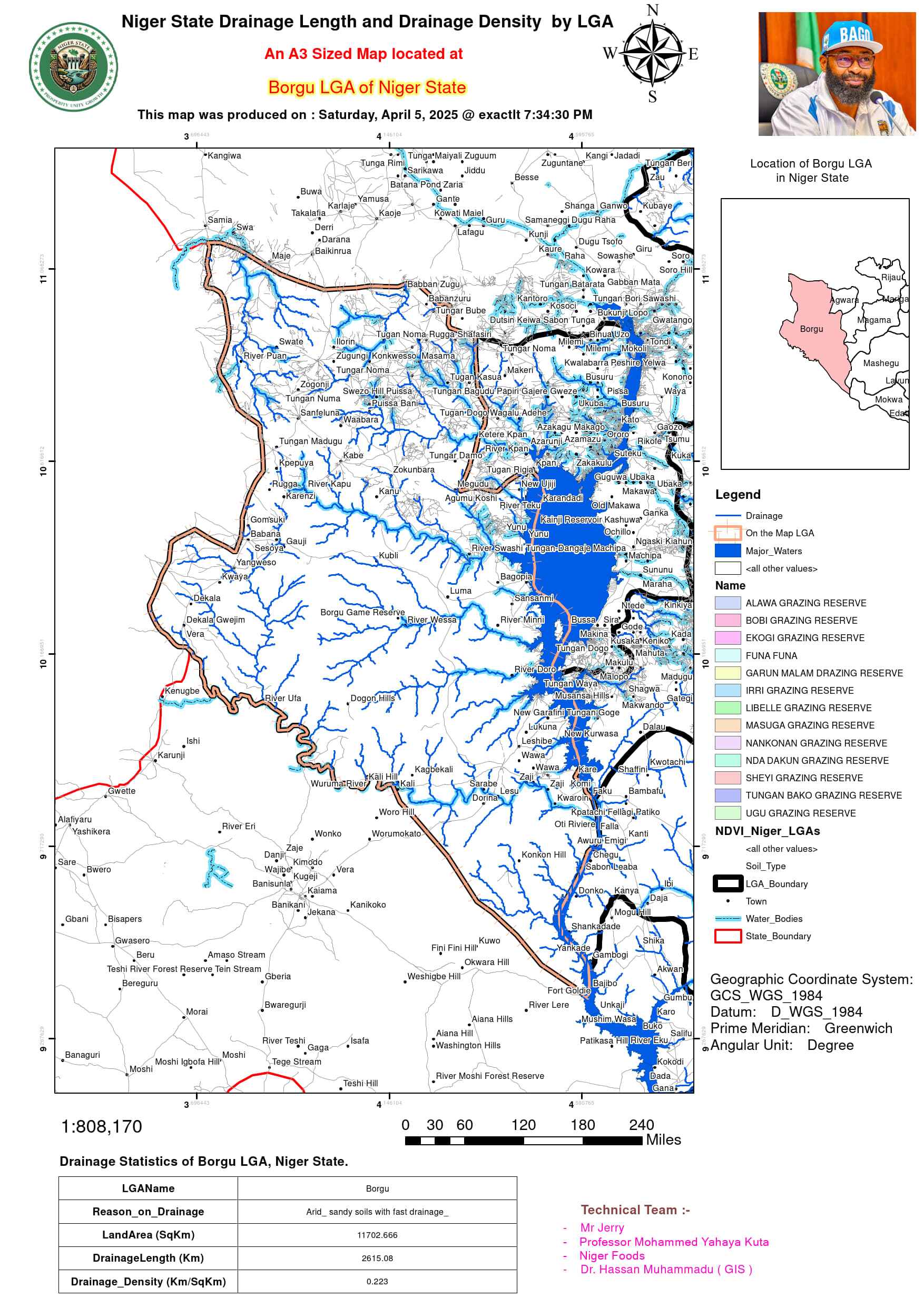
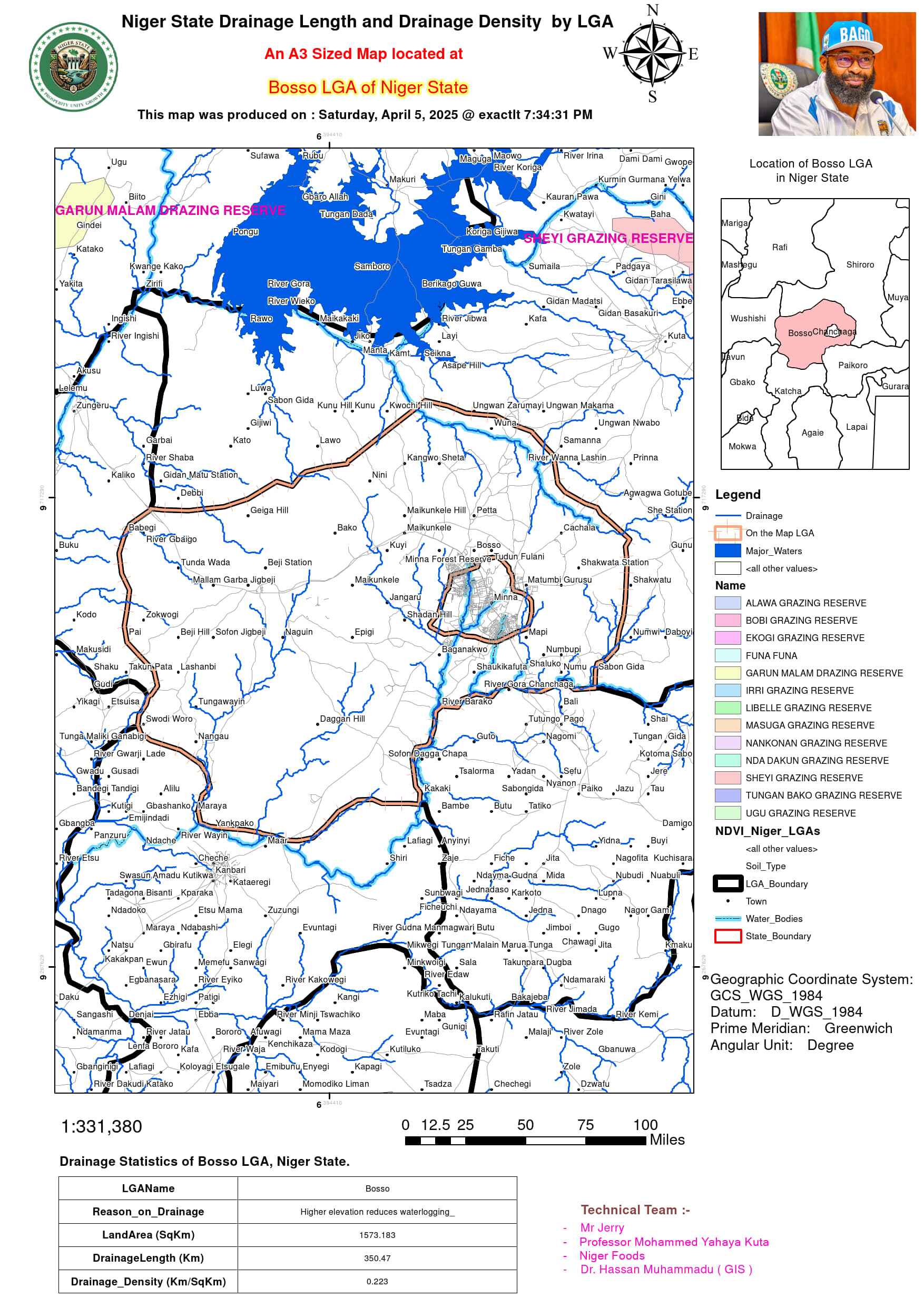
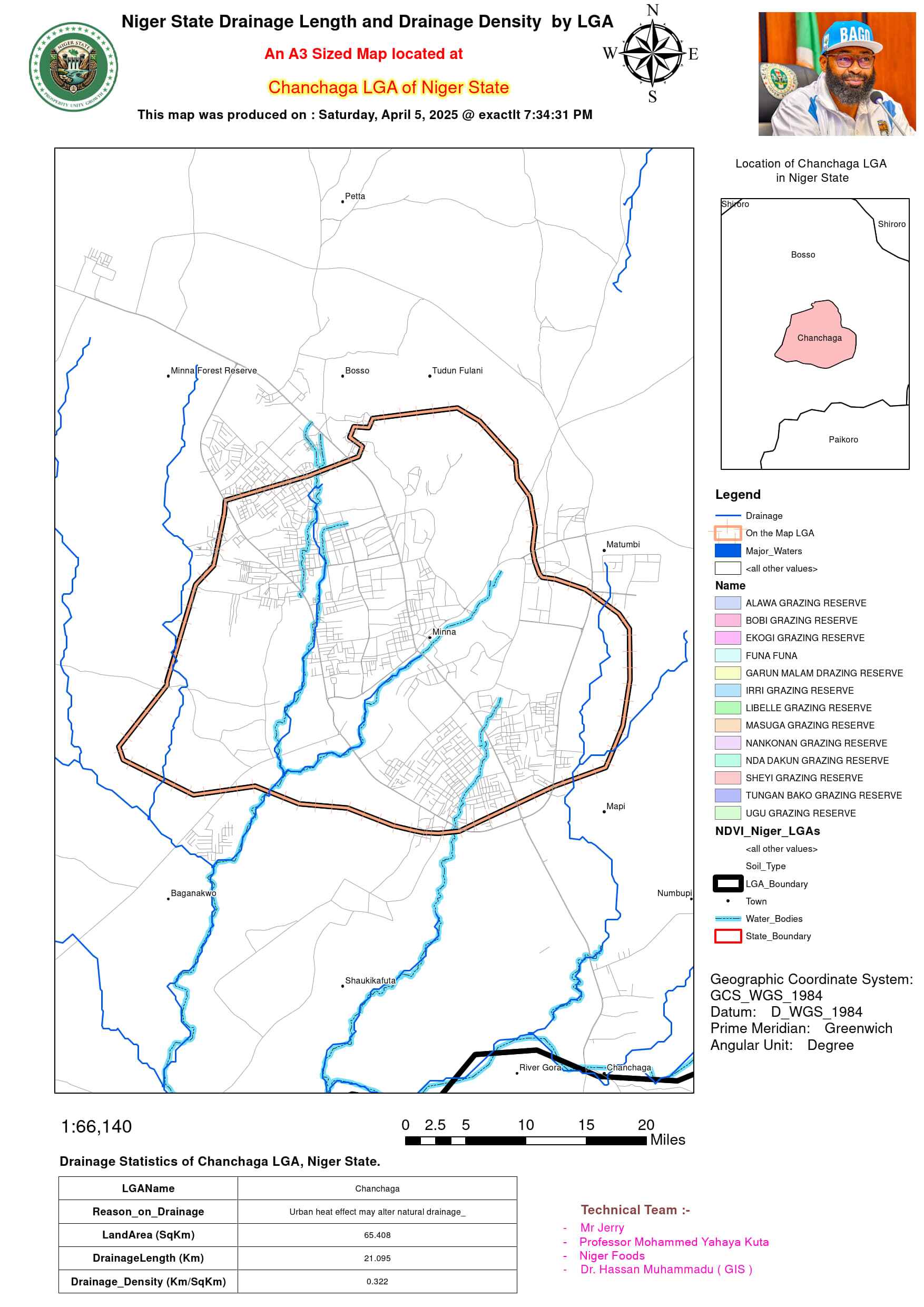
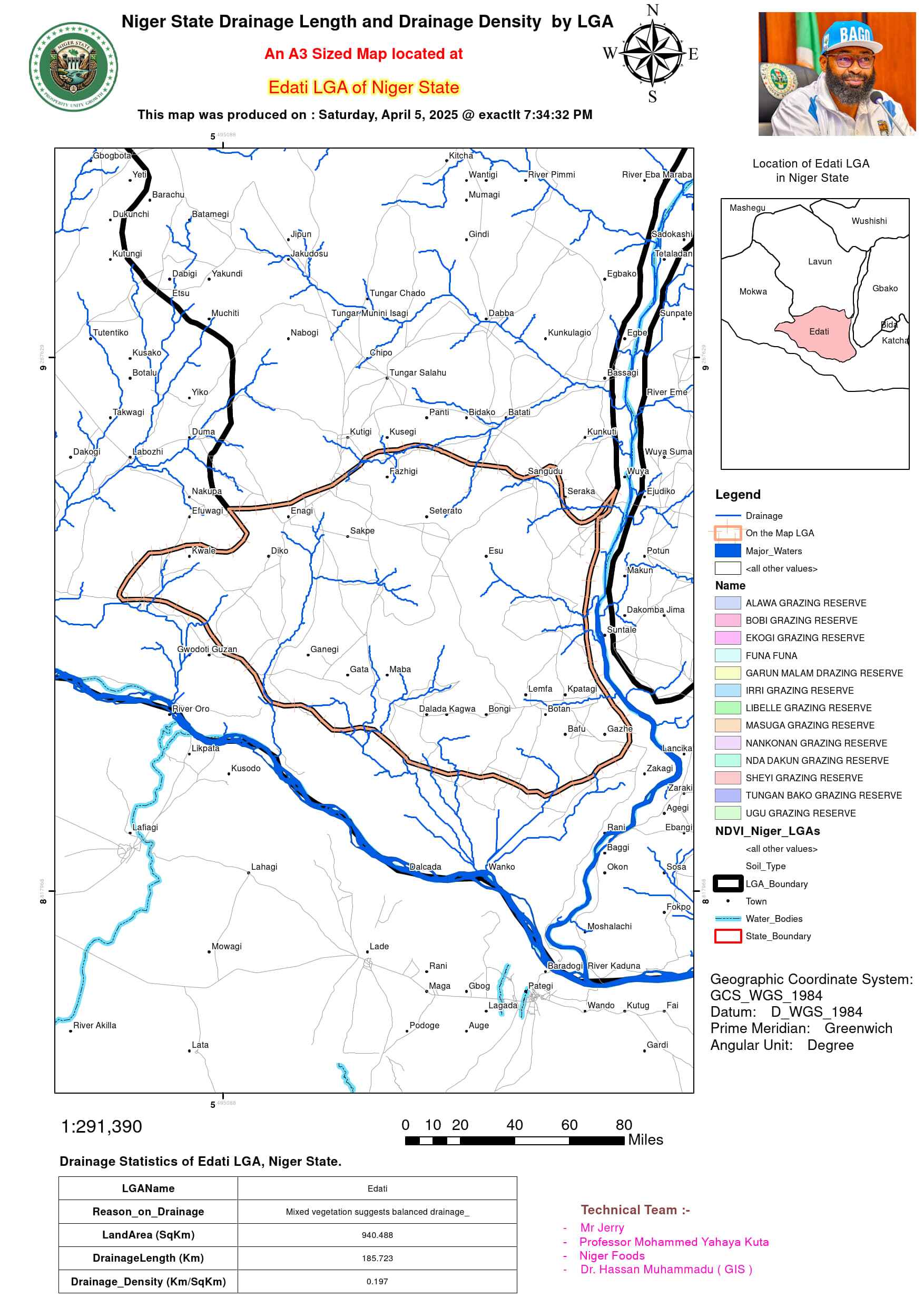
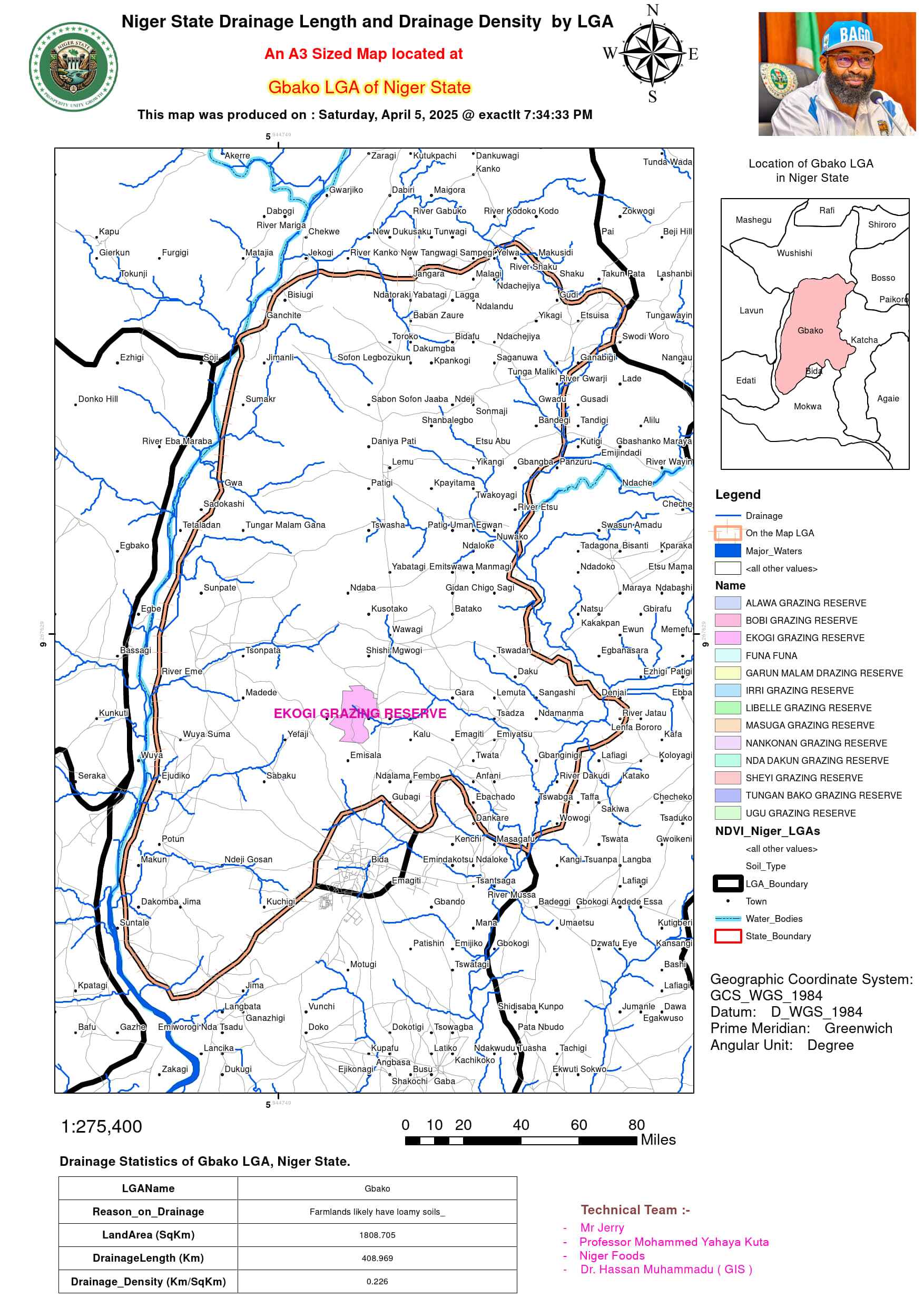
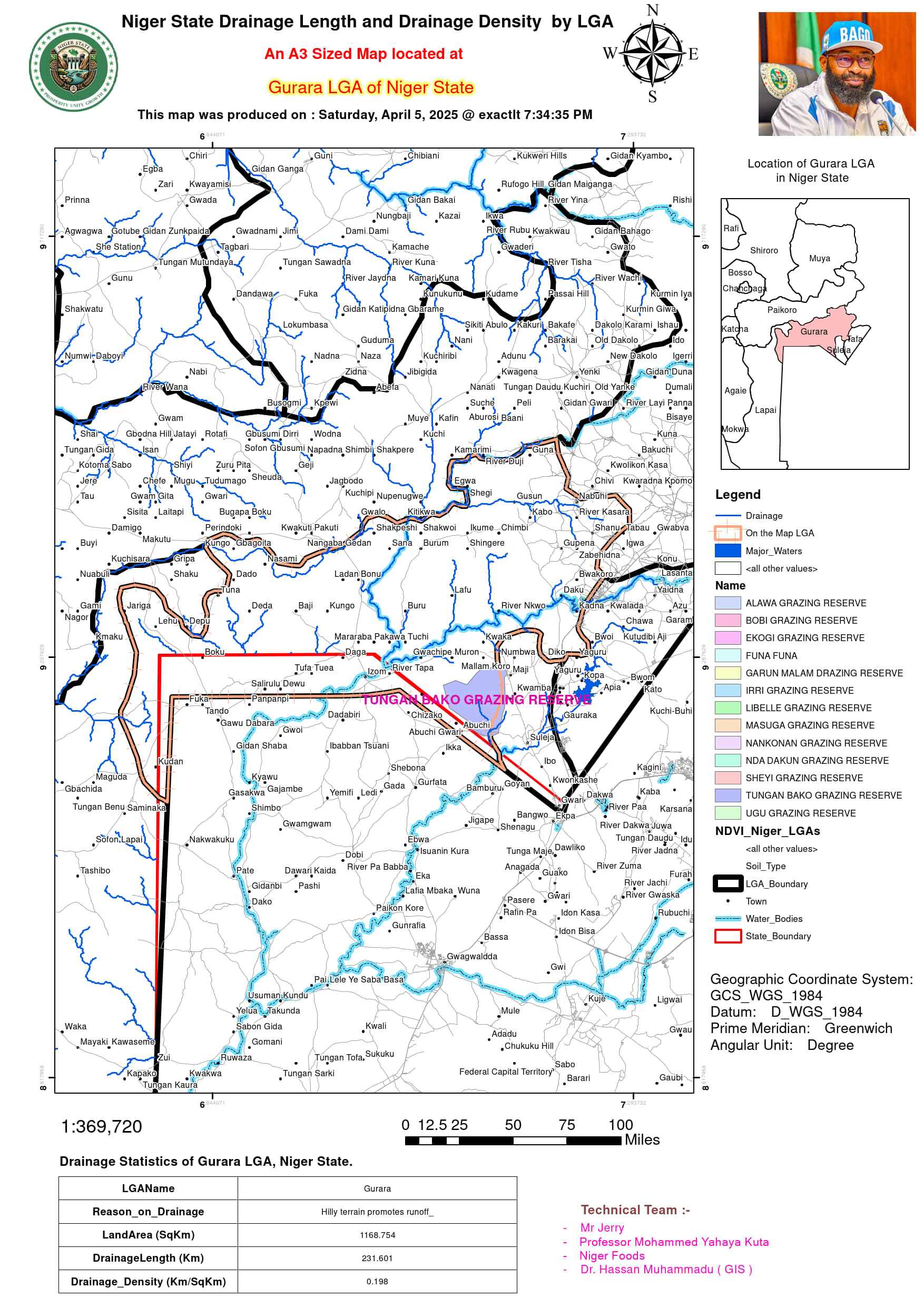
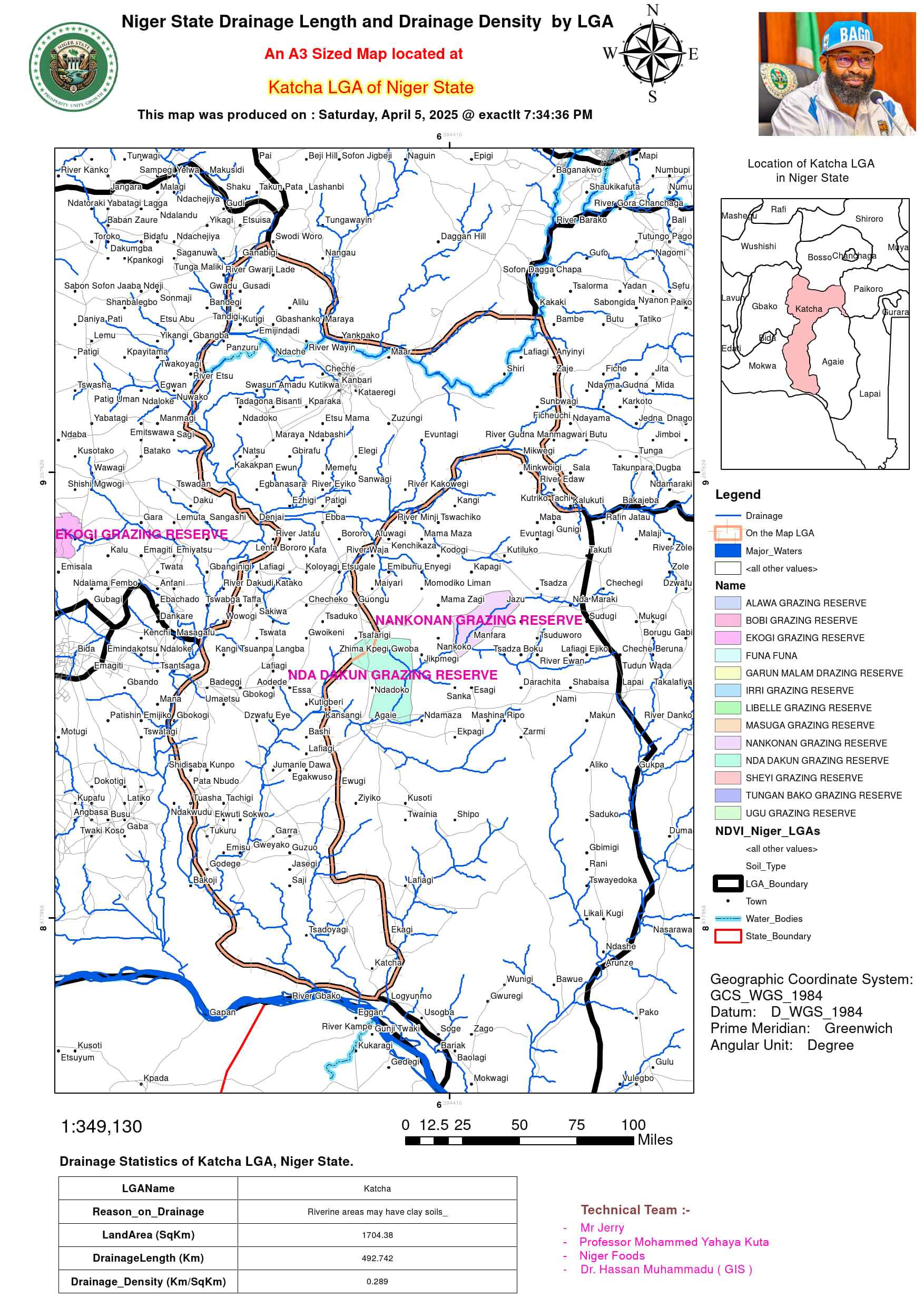
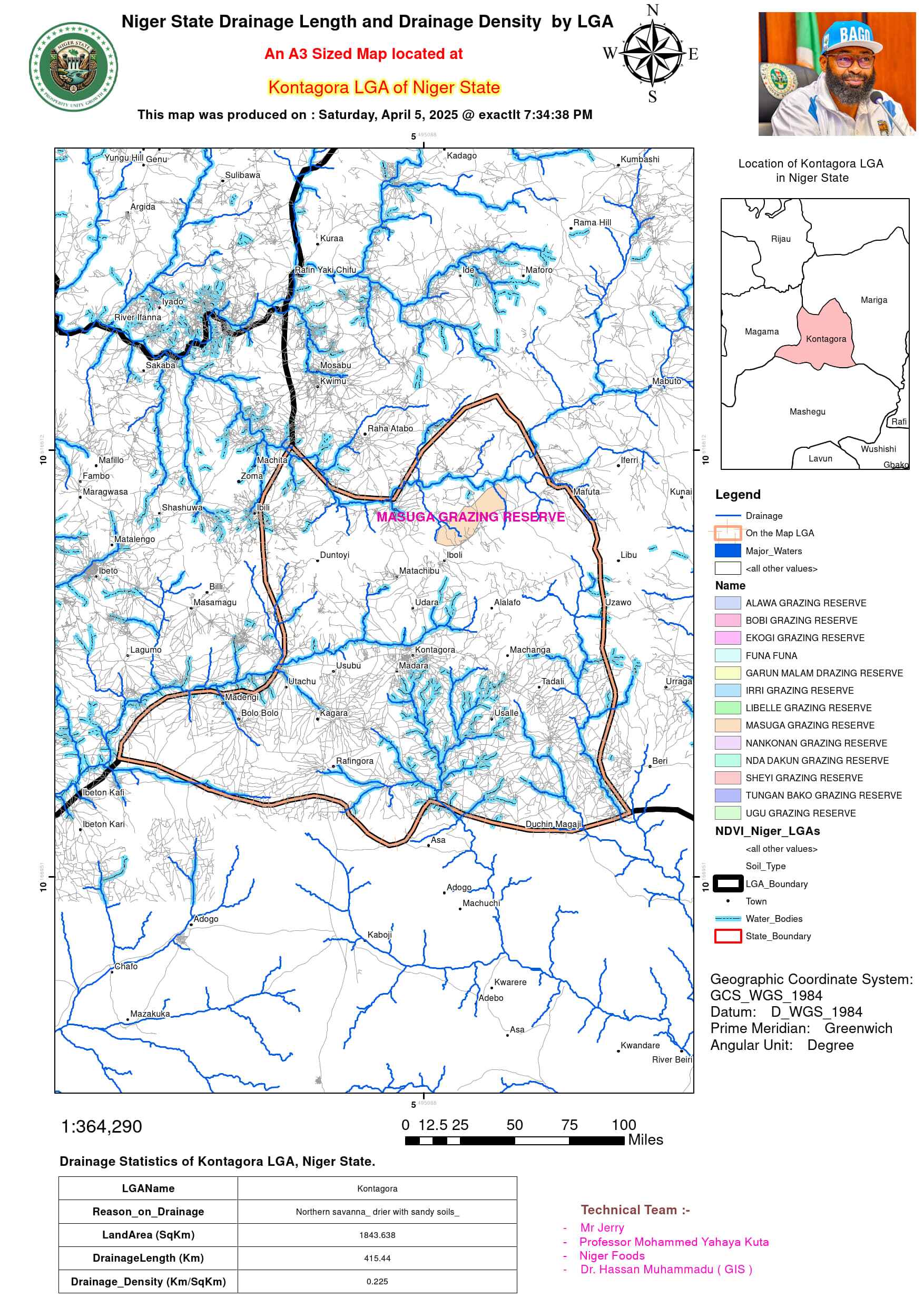
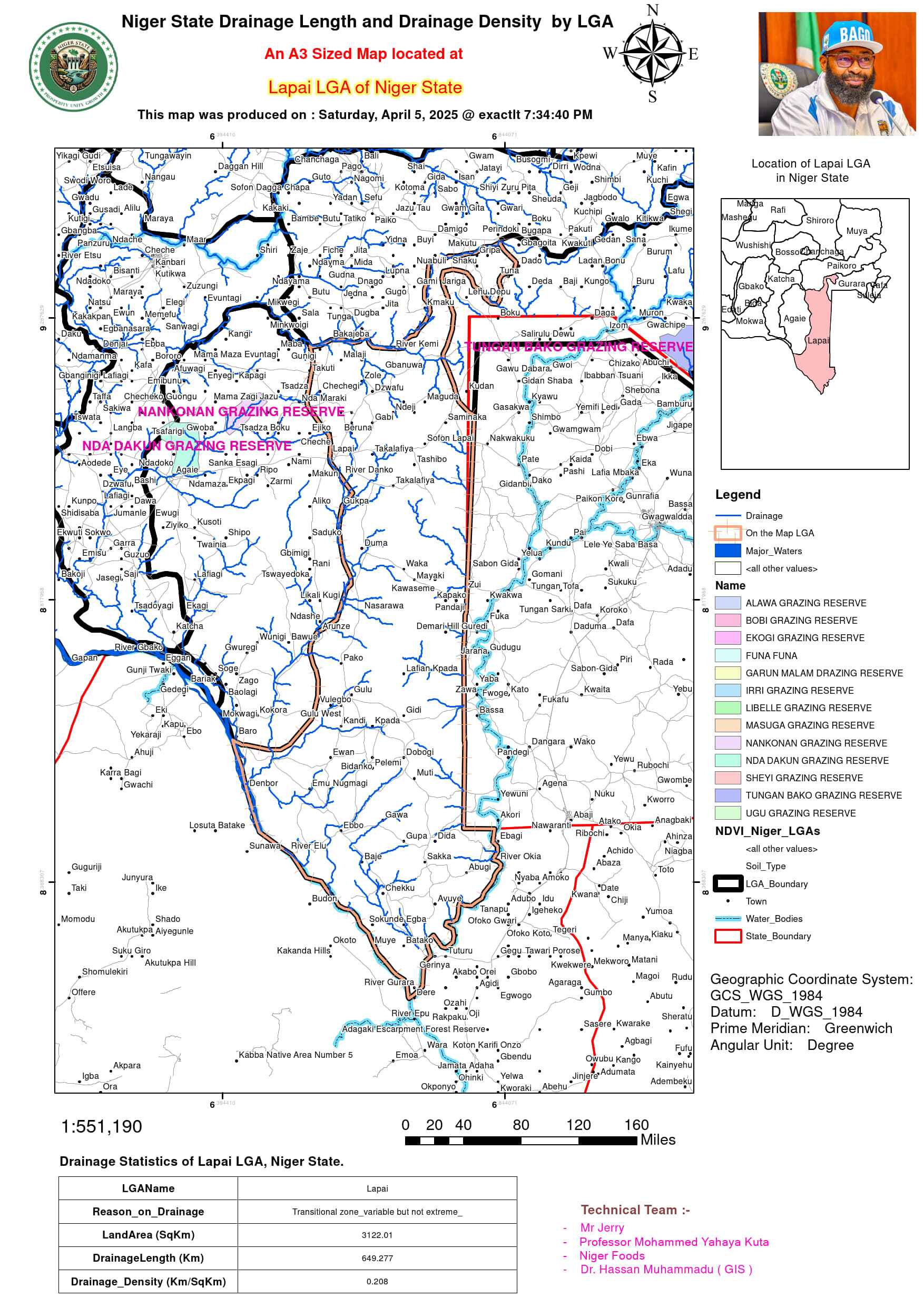
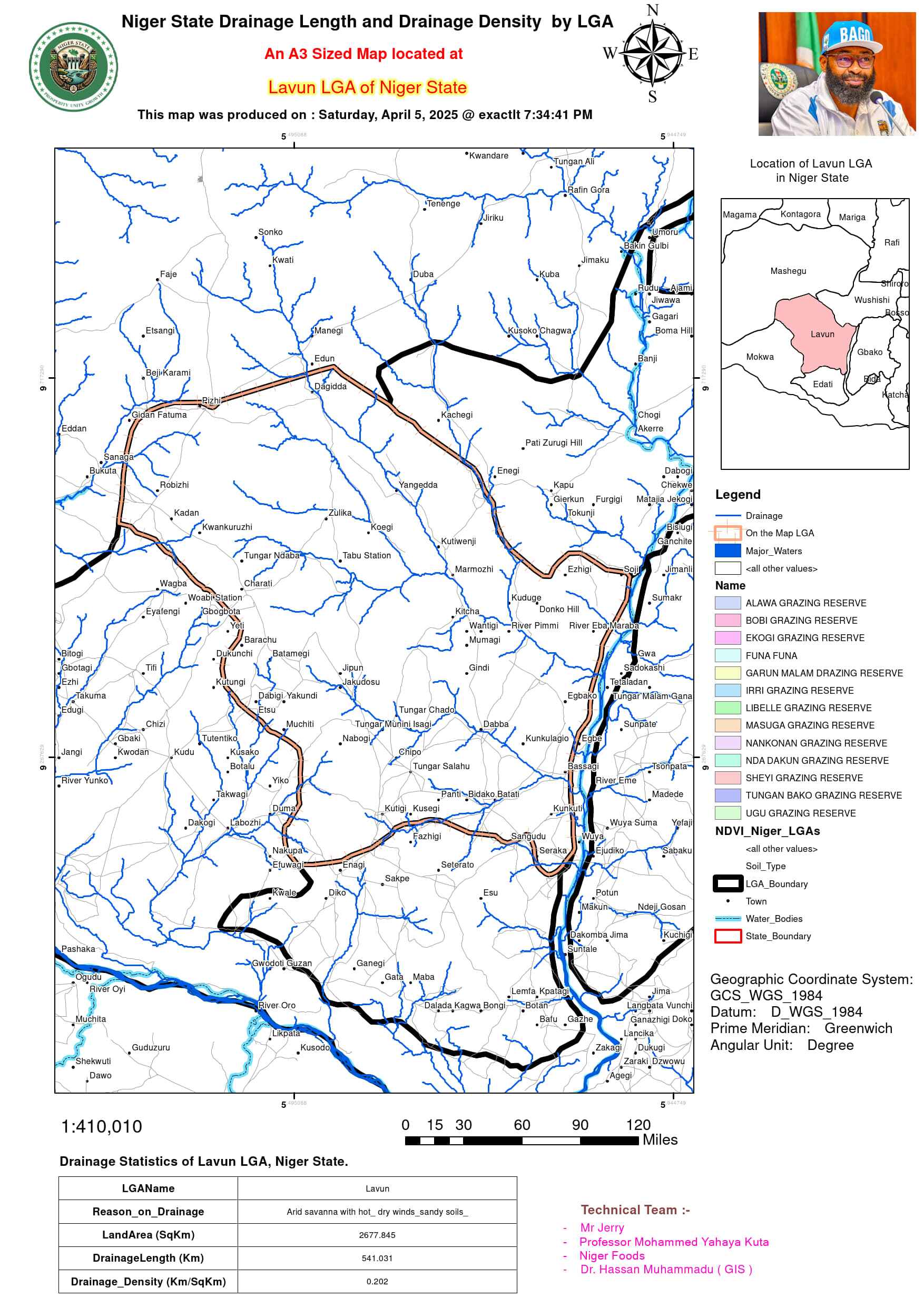
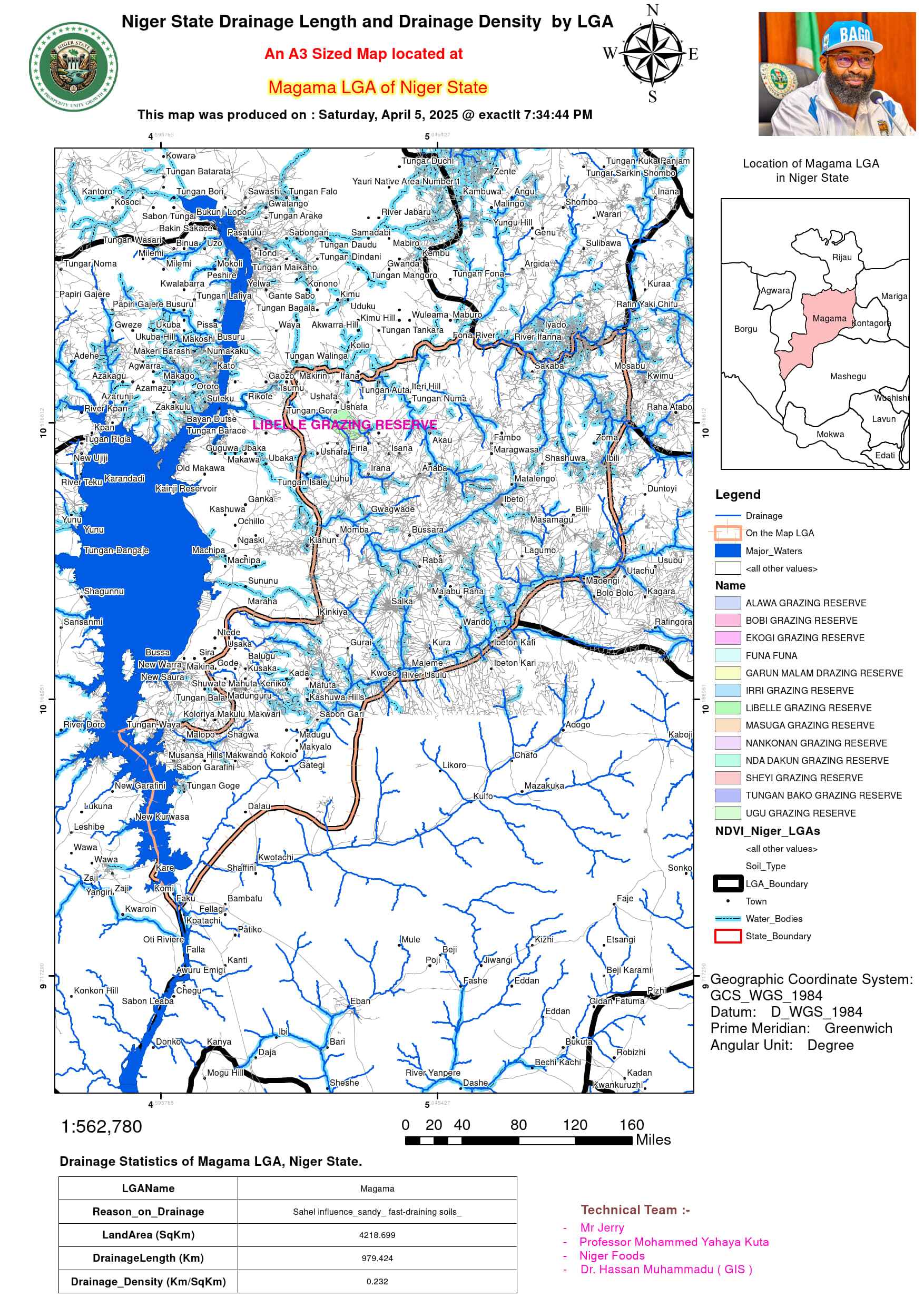
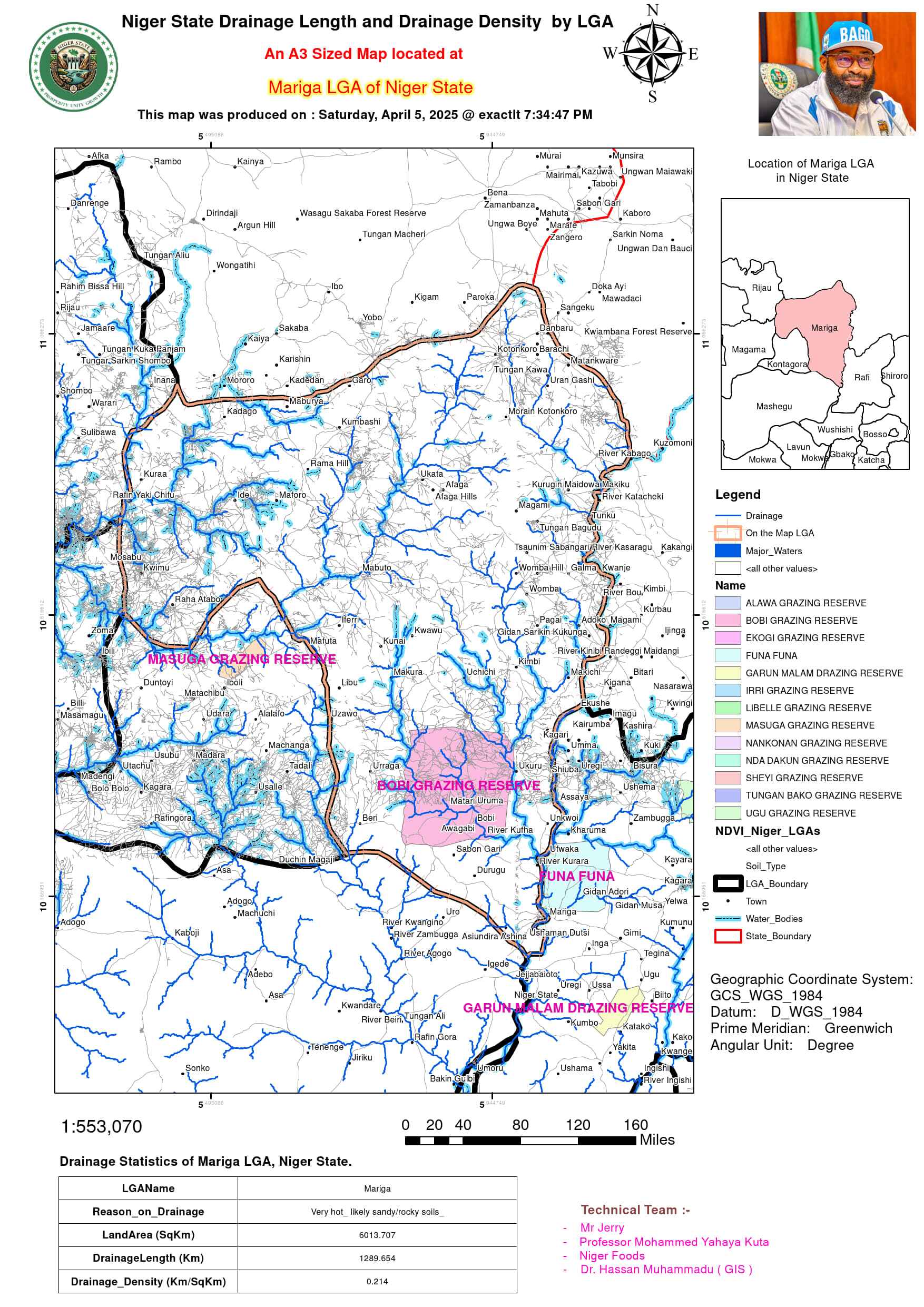
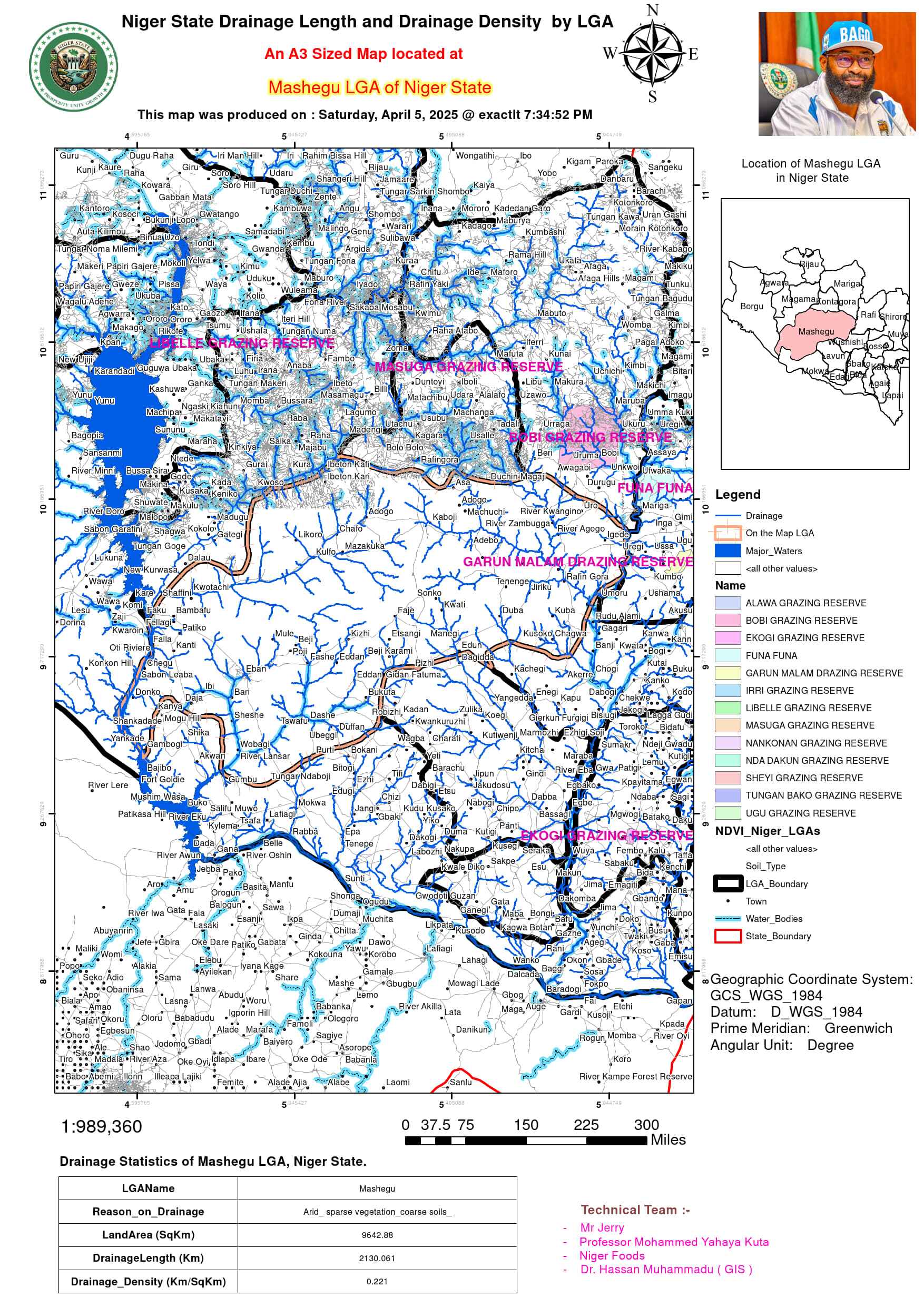
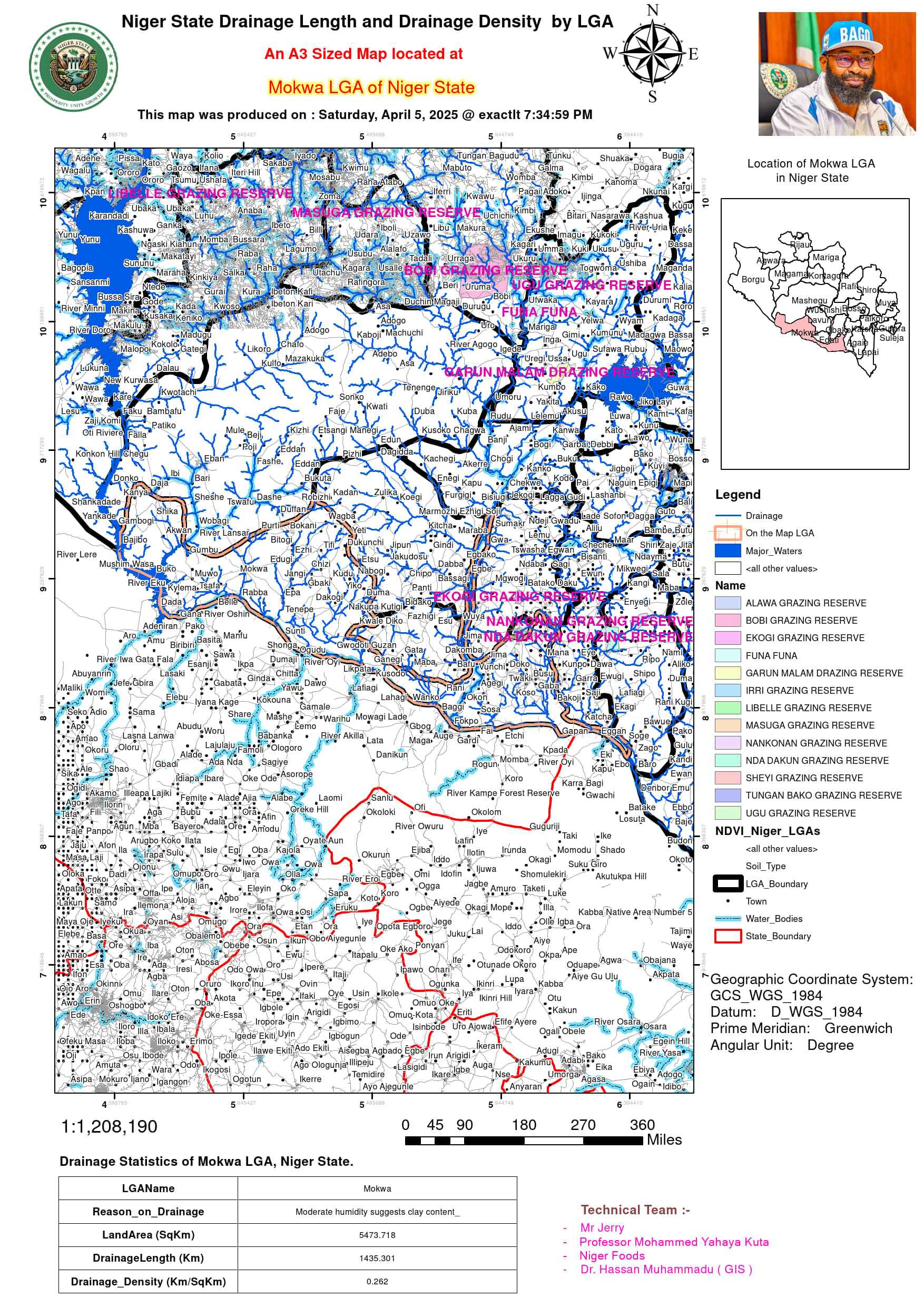
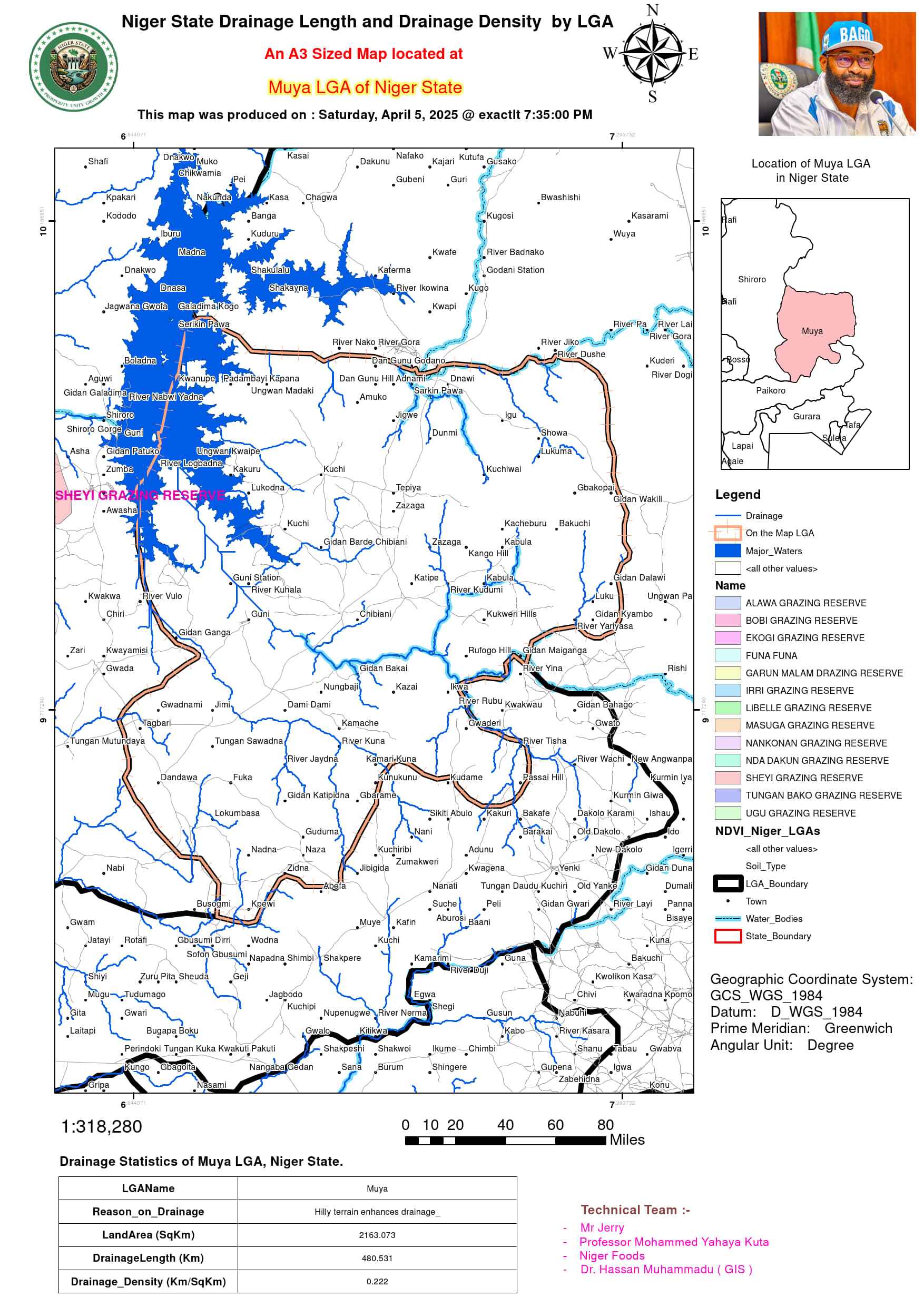
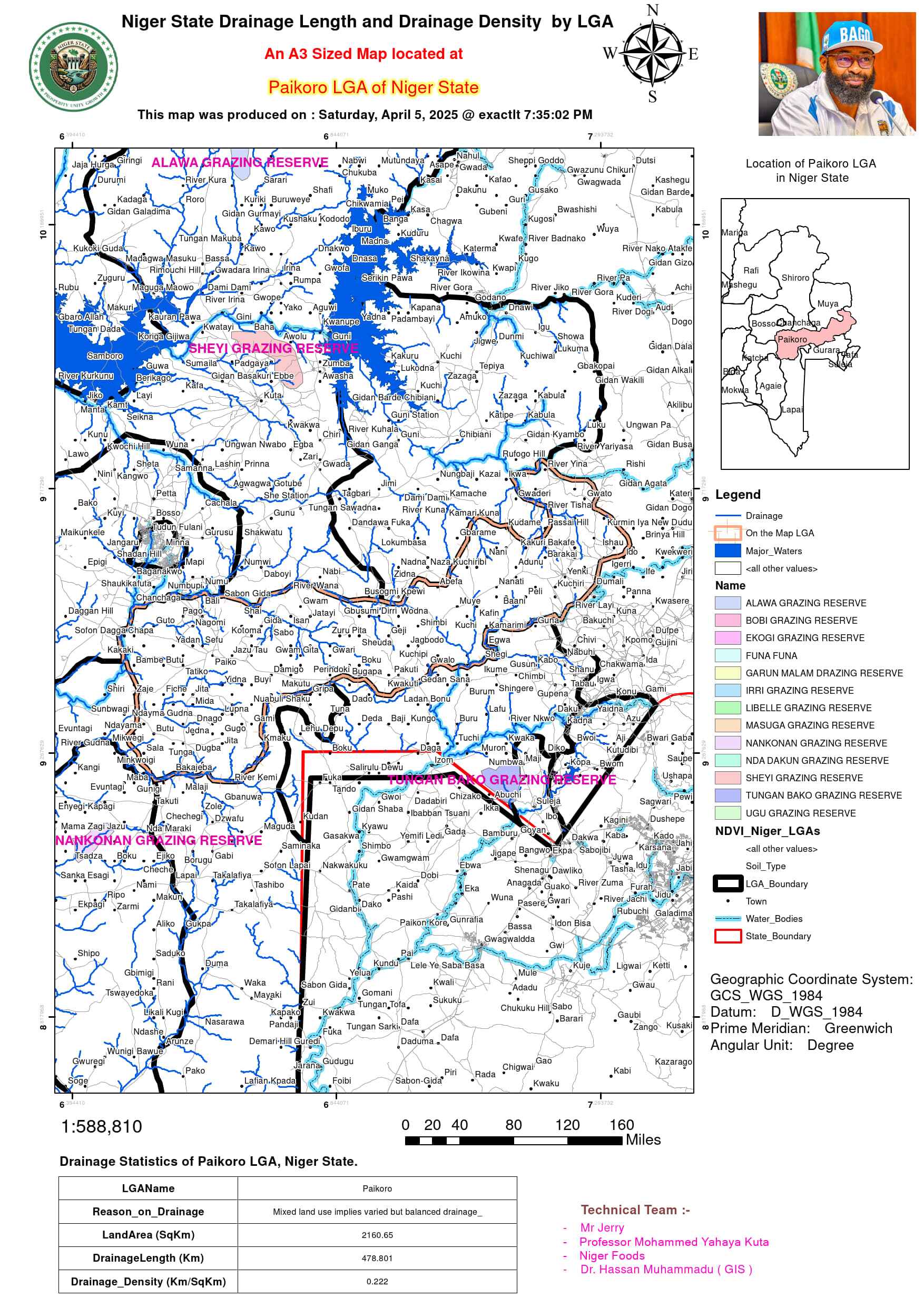
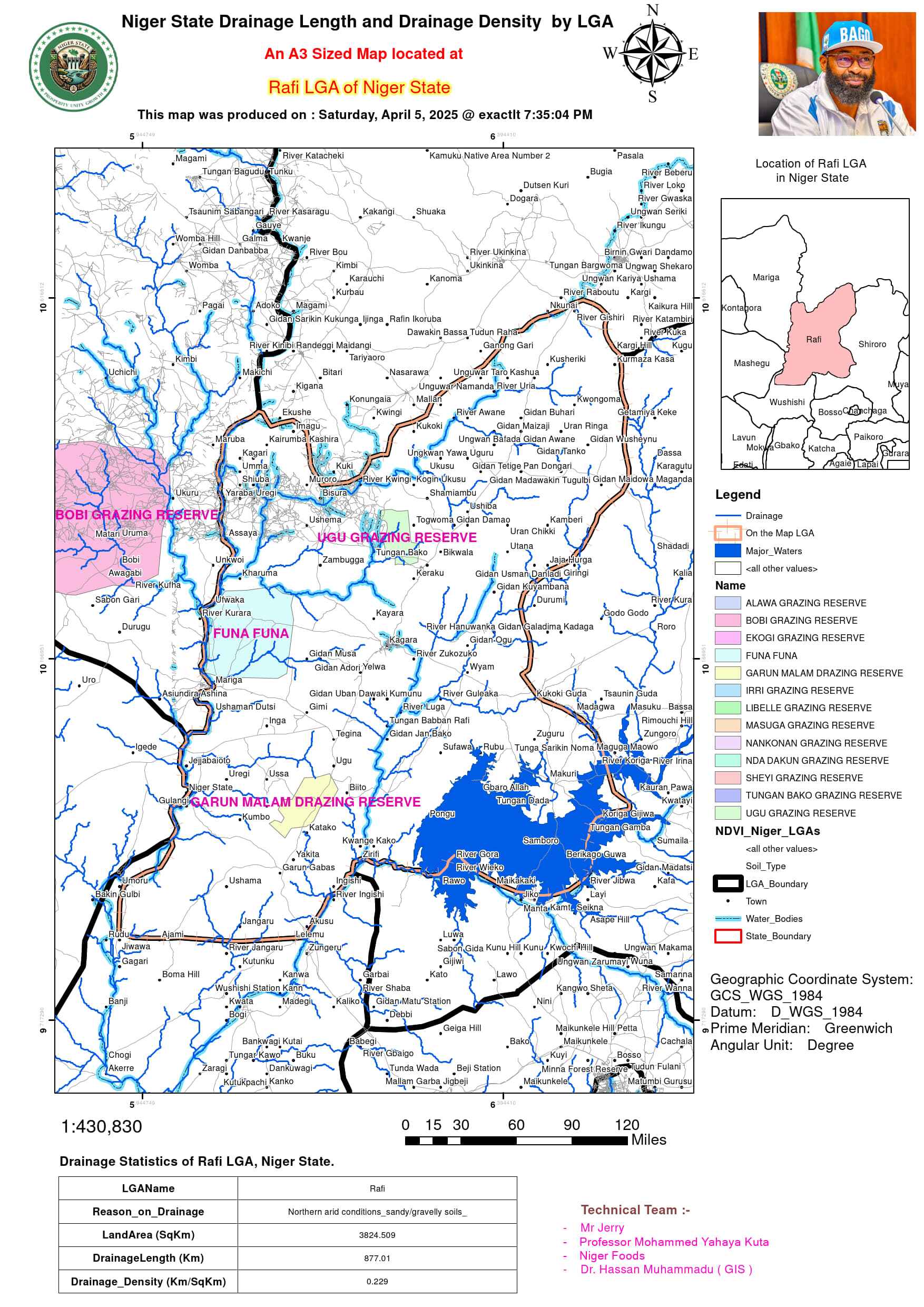
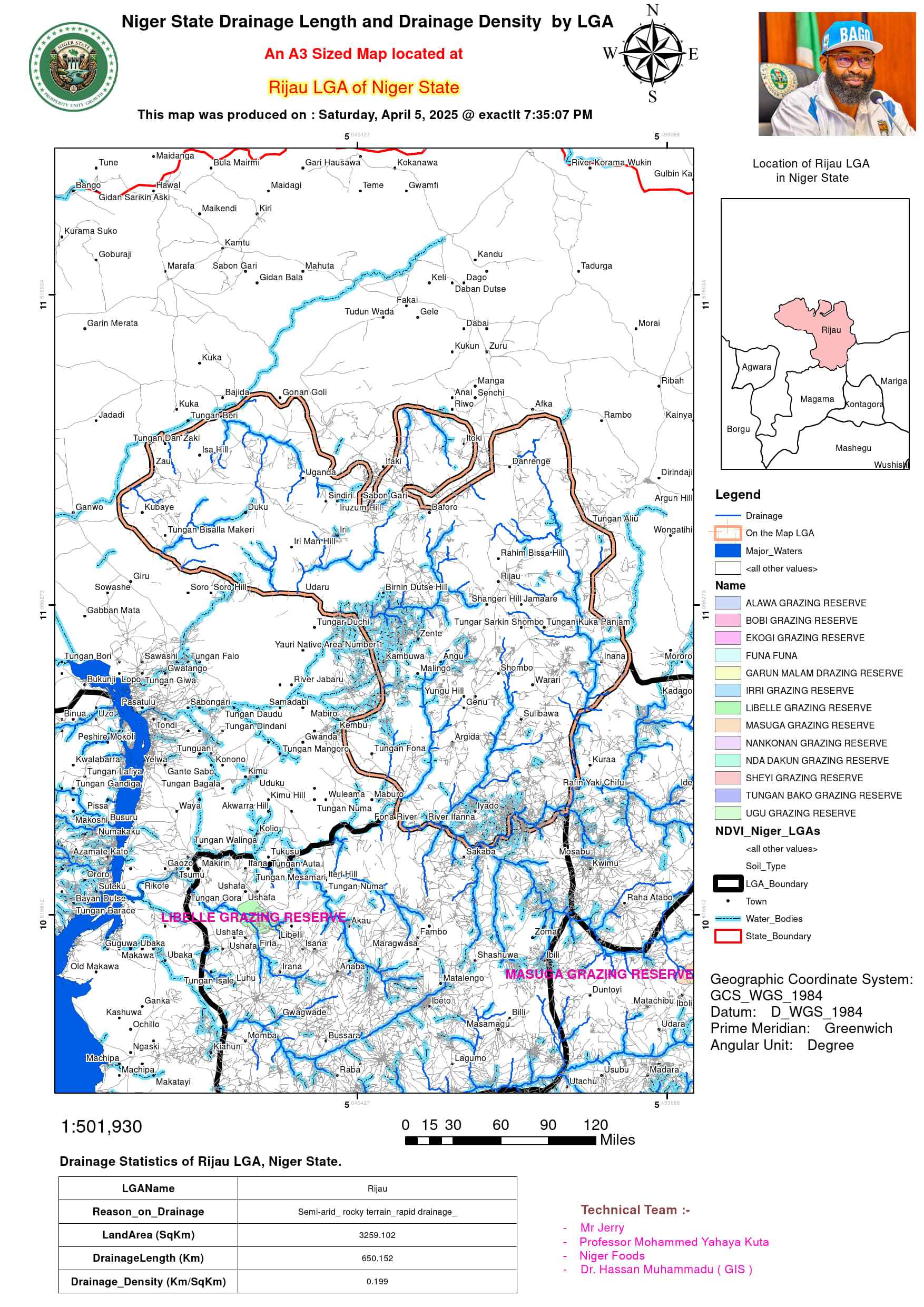
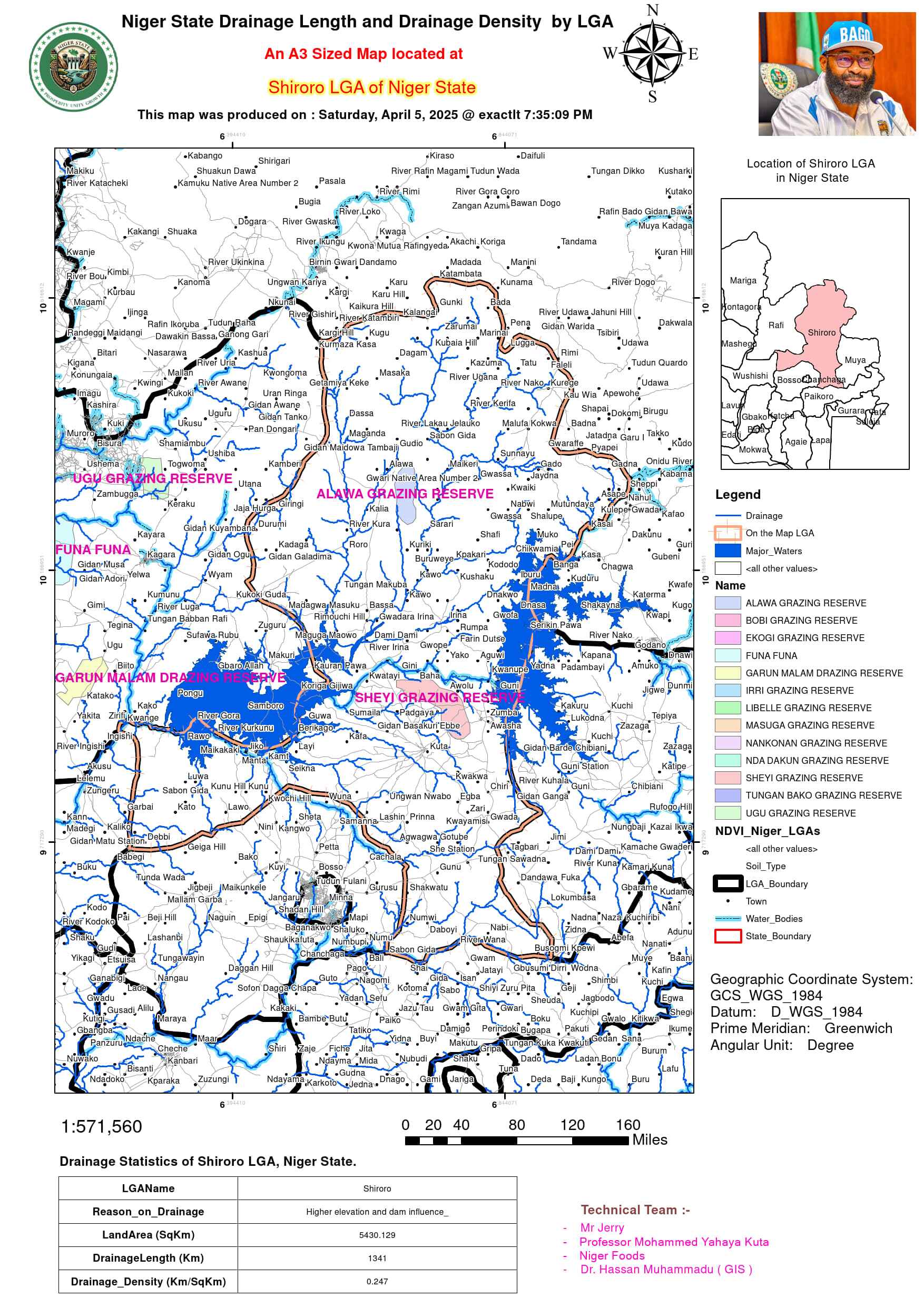
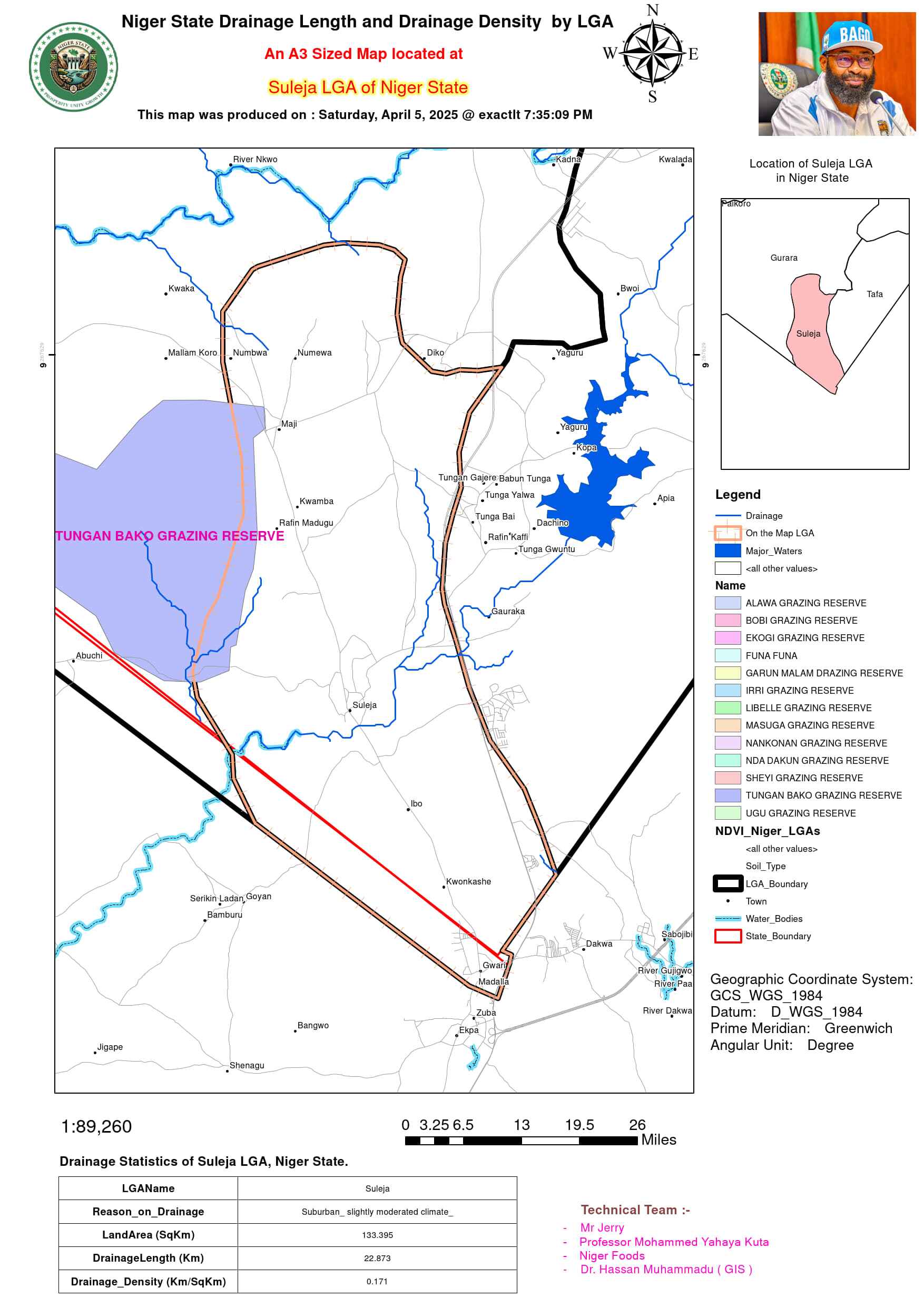
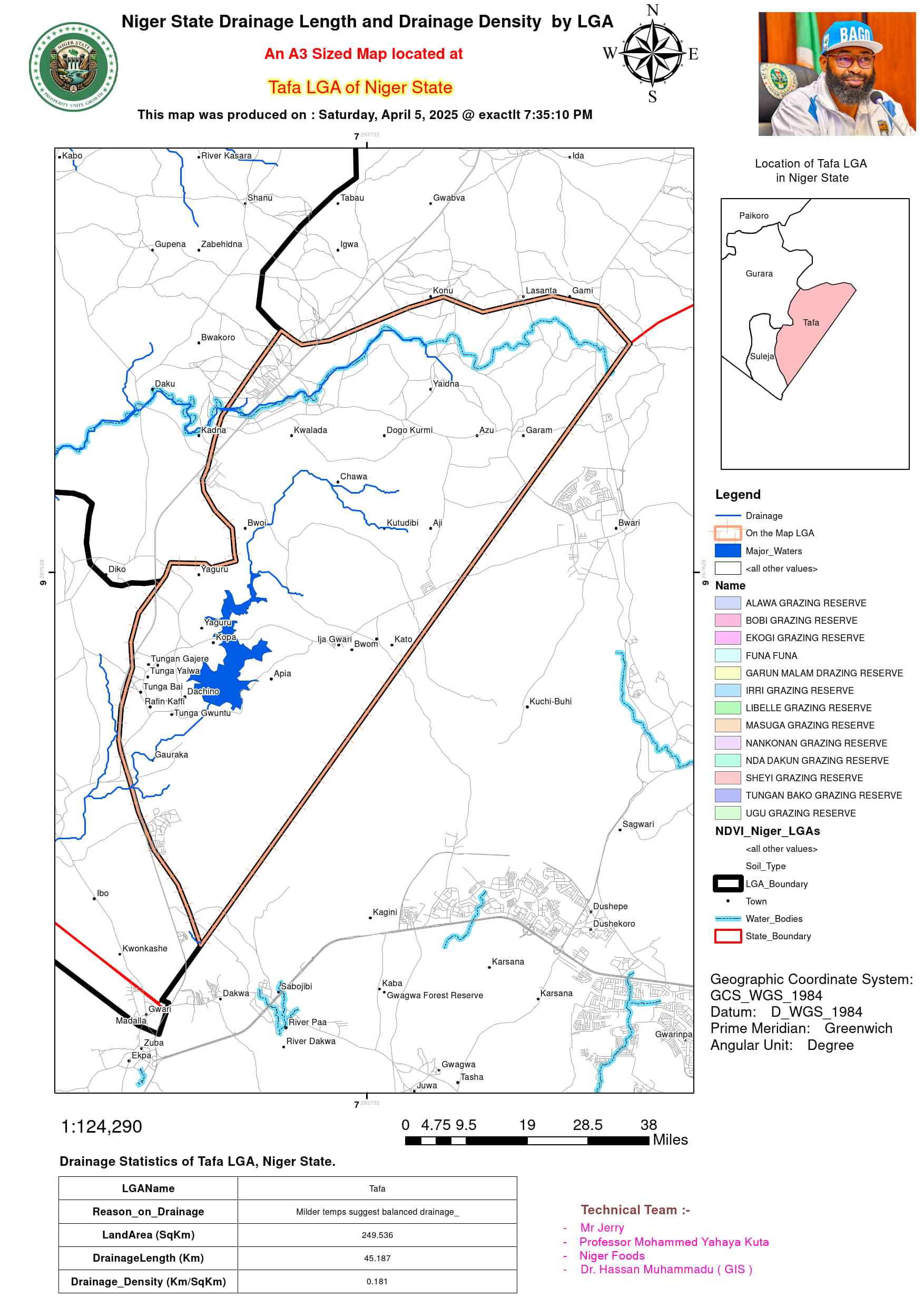
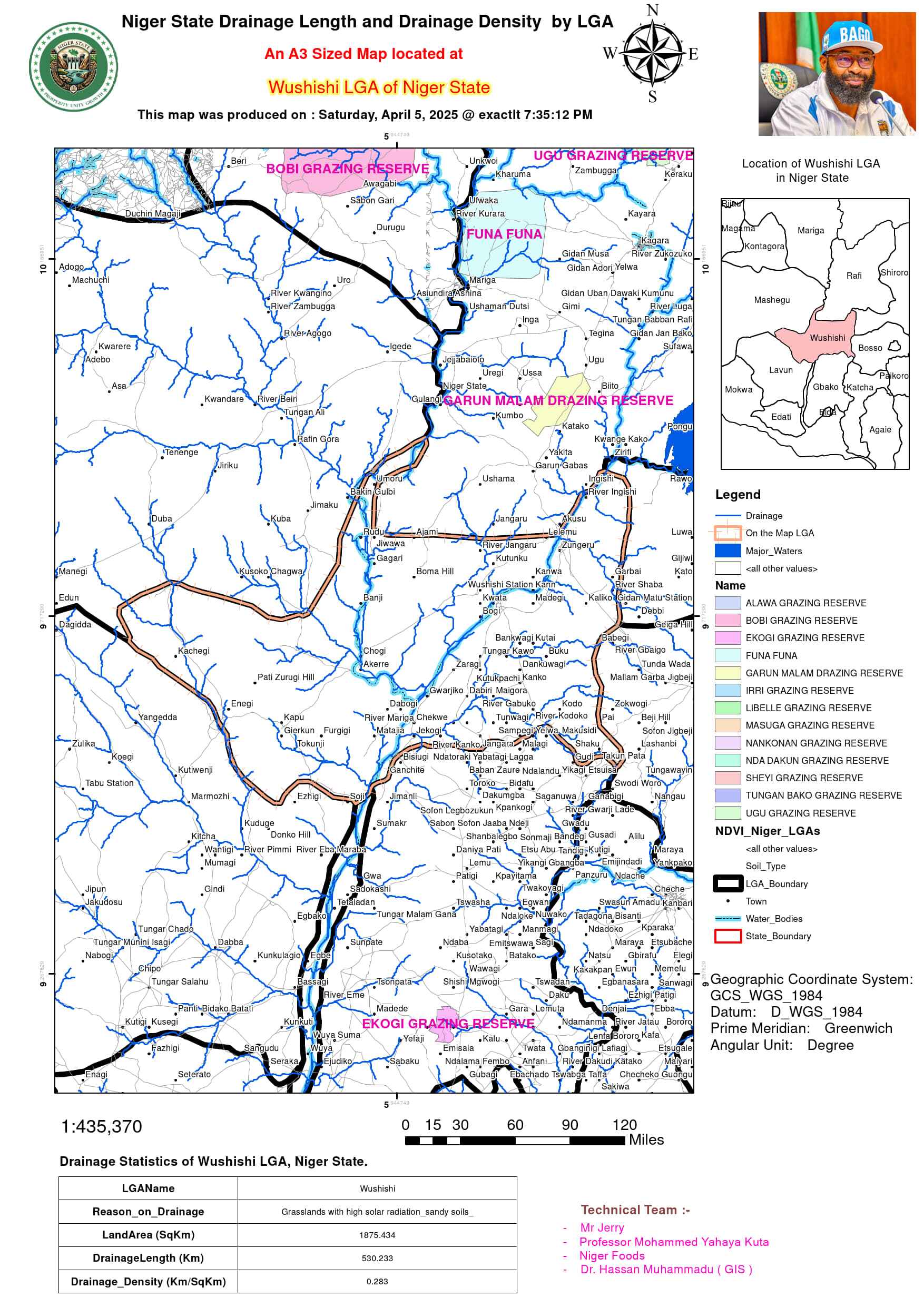
Niger State exhibits diverse soil drainage patterns influenced by its varying geography and climate. In riverine and low-lying LGAs like Agwara, Katcha, and Mokwa, soils tend to be poorly drained due to clay-rich alluvial deposits and frequent flooding, leading to waterlogging. Urbanized areas such as Chanchaga (Minna) and Suleja experience moderate but often altered drainage from human activity, while transitional savanna zones like Edati, Lapai, and Paikoro typically have moderately drained loamy soils, balancing moisture retention and permeability. **Arid and semi-arid northern LGAs—including Borgu, Kontagora, Magama, Rijau, and Wushishi—feature well to excessively drained sandy or rocky soils, causing rapid water infiltration and drought susceptibility. Hilly terrains like Bosso, Gurara, Muya, and Shiroro promote well-drained conditions through natural runoff, whereas floodplain regions (e.g., Bida, Mokwa) struggle with prolonged water retention. Hot, dry savanna LGAs (Agaie, Lavun, Mariga, Mashegu) lean toward faster drainage, with sandy or lateritic soils dominating. Meanwhile, suburban and agriculturally active zones (Gbako, Tafa) maintain moderate drainage, though farming practices can modify natural soil behavior. Overall, drainage efficiency in Niger State ranges from waterlogged river basins to parched, fast-draining arid lands, with significant implications for agriculture, construction, and flood management.